History
Intent
As historians, our children are offered invaluable opportunities to gain a deeper understanding of the history of Britain and the wider world. Through engaging topics, we encourage our children to delve into the past and develop a coherent understanding of historical concepts. We aim to inspire curiosity through an enriched curriculum where our children are able to immerse themselves in history and all it has to offer! In equipping our pupils to ask perceptive questions, think critically, weigh up evidence and develop perspective, we are allowing them to become the archaeologists and museum curators of the future.
Implementation
In Early Years
The teaching of history begins in the Early Years, where children explore the concepts of past and present.
Using the expectations for historians set out in the Early Learning Goals, carefully identified curriculum intent for our Early Years’ children recognises the small steps in knowledge and skill acquisition that is expected across our Pre-School and Reception classes. This ensures that all children have already acquired a secure understanding of what is meant by the past and present before they begin Key Stage 1. This is achieved through ongoing access and carefully planned opportunities across the Early Years curriculum:
| Early Learning Goal | Talk about the lives of people around them and their roles in society | Know some similarities and differences between things in the past and now drawing on their experiences and what they has been read in class | Understand the past through settings, characters and events encountered in books read in the class and story telling |
In Key Stage 1
Teaching in Key Stage 1 builds on the foundations established in Early Years. Children learn about significant historical events globally and nationally through:
- changes within living memory.
- events beyond living memory that are significant nationally or globally.
- the lives of significant individuals in the past who have contributed to national and international achievements.
| Year A | |||
| Key Stage 1 | Significant Individuals: Captain Cook | Changes With Living memory: How Toys have developed | Changes Beyond Living memory: The Great Fire of London |
| Lower Key Stage 2 | The Roman Empire and its impact on Britain | The achievements of the earliest civilizations – The Aztecs | |
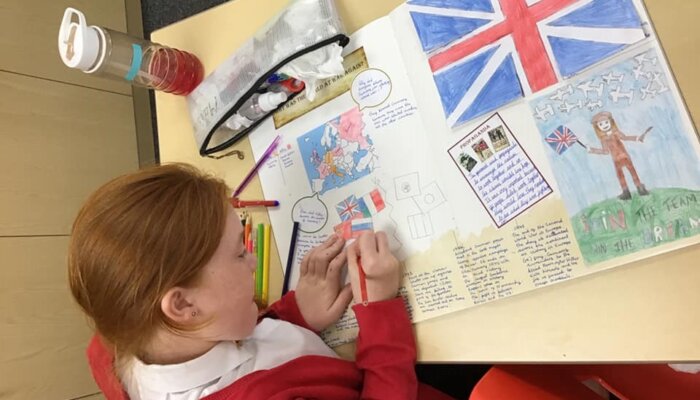
| Upper Key Stage 2 | British history – World War Two | Local History Study – Mining in the Victorian Era | |
In Key Stage 2
Learning in Ket stage 2 builds on the understanding of significant events and people. Greater emphasis is placed on placing historical events in different periods and understand more greatly the importance of chronology.
- changes in Britain from the Stone Age to the Iron Age
- the Roman Empire and its impact on Britain
- Britain’s settlement by Anglo-Saxons and Scots
- Anglo-Saxon struggle for the Kingdom of England
- a study of an aspect or theme in British history that extends pupils’ chronological knowledge beyond 1066
- the achievements of the earliest civilizations
- Ancient Greece – a study of Greek life and achievements and their influence on the western world
- a local history study
| Year B | |||
| Key Stage 1 | Significant Individuals: Neil Armstrong | Changes With Living memory: Transport | Changes Beyond Living memory: The Gunpowder Plot |
| Lower Key Stage 2 | Changes in Britain from the Stone Age to the Iron Age | Britain’s settlement by Anglo-Saxons and Scots | |
| Upper Key Stage 2 | Social history: Crime and punishment from the Romans to the present day | Ancient Greece – a study of Greek life and achievements and their influence on the western world | |
Supporting pupils with additional needs
The curriculum at Skelton is accessible to all pupils, regardless of background or need.
This will be supported and achieved through a range of ways, including:
• Additional repetition of learning to support embedding the knowledge (to help the children to remember the knowledge).
Repetition to take the form of retrieval tasks and learning the same information in different ways over several lessons.
• A wider range of practical activities in the curriculum to support children’s individual needs, including a range of recording methods.
• Reading differentiated to support lower-level readers.
• A range of practical resources and support tools to enable access to the curriculum.
Impact
In order to effectively design tasks it is imperative that the classroom teacher understands fully the success that pupils have had with their learning. We use our purpose built App to track skills progress across History.
It is worth noting that we define success in our curriculum beyond the assessment of the foundation subjects. We also look to build self –belief and respect so that all children develop a sense of self-worth. We hope to see the children realise new skills and find new interests and talents along their learning journey.
If you would like to know more about our History curriculum, please email office@skeltonprimaryschoool.co.uk