
Music
Intent
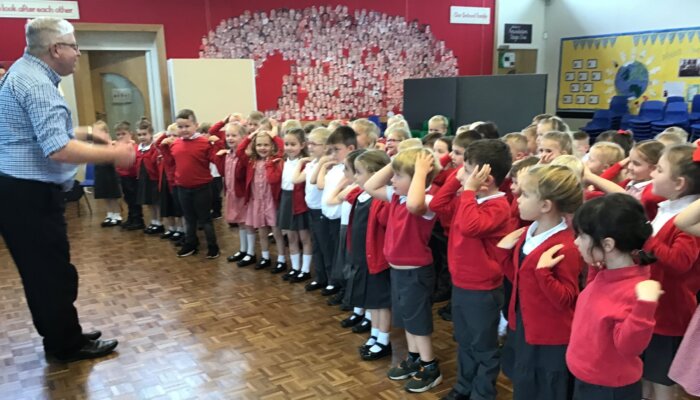
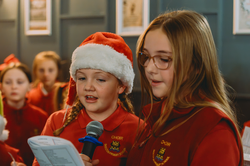
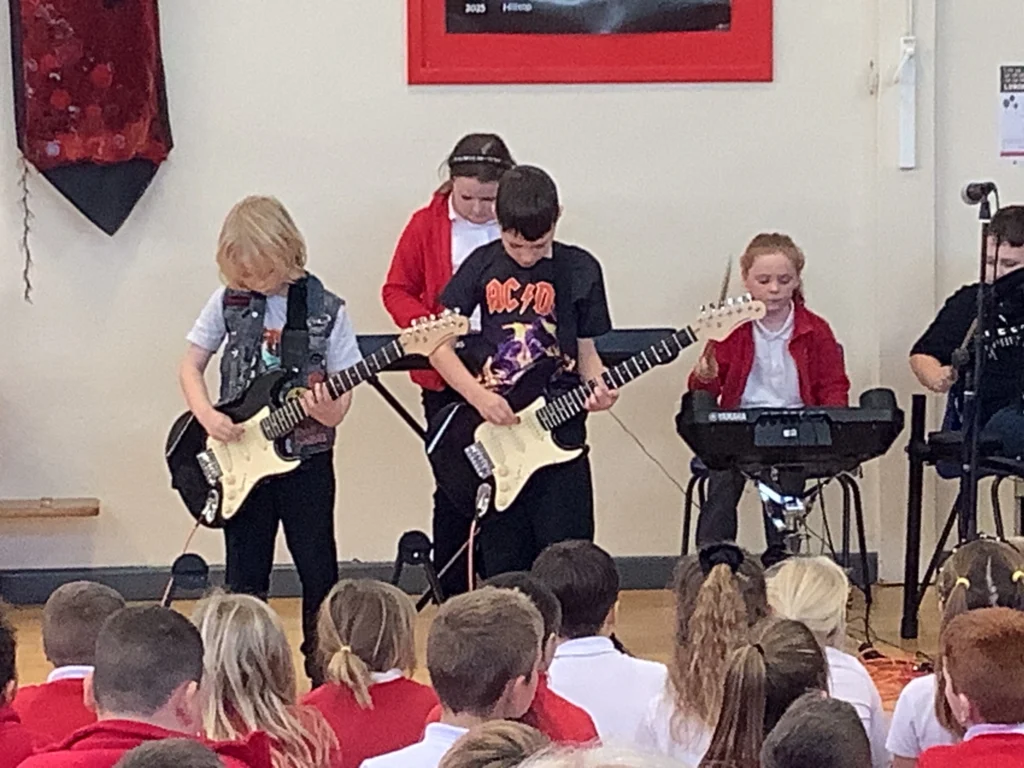
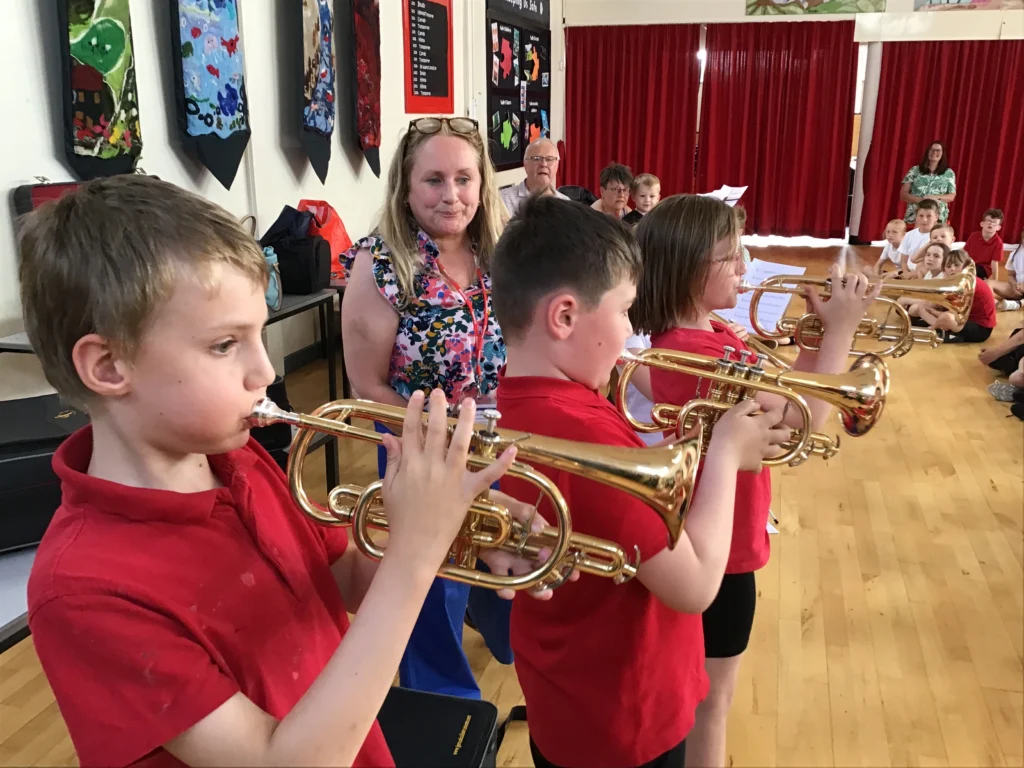
As musicians our children are offered the opportunity to develop their love of music through a variety of dimensions. We allow them opportunities to perform a variety of music from across musical periods, from a range of musicians and styles. Through our weekly singing sessions children learn to use their voices competently and confidently. We enable them to learn a musical instrument and explore technology used in the creating of musical compositions. We hope to encompass a passion for music by teaching them skills that they can develop over time, opening doors for them to be ready to become the composers, pop stars and musicians, fluent in the universal language of music.
Implementation
Ready, Reflective, Respectful, Responsible, Resilient
As a school we follow the Charanga scheme of Music
In Early Years
In Early Years, children will take part in the Listen and Respond and Games tracks, which include a wide range of activities. These allow teachers to vary their approach each session and focus on different aspects of learning. The sessions include well-known songs, action songs and nursery rhymes, with singing supporting the development of communication and language skills.
Improvisation is woven throughout Listen and Respond, Games, and the playing of simple untuned instruments and body percussion. Children will match simple percussion instruments to pictures, encouraging them to be imaginative and expressive. They will also copy back simple movements to the pulse of the music, helping to develop rhythm, coordination and listening skills
Curriculum Map
| Area | Nursery | Reception |
|---|---|---|
| Listen and Respond | Listen with increased attention to sound. Listen for signs to know when to start and stop. | Listen attentively, move to and talk about music. Follow and respond to a leader. |
| Sing/Chant | Remember and sing short songs with an awareness of the melodic shape. Sing the pitch of a tone sung by another person (“pitch match”). Know that a song can tell a story. | Sing well-known songs in a group or on their own, increasingly matching the pitch and following the melody. Read words consistent with their phonic knowledge by sound-blending. Know that a chant uses speaking voices musically. |
| Play Instruments | Play untuned percussion with increasing control. | Demonstrate coordination when playing untuned percussion. |
| Move and Dance | Skip, hop, stand on one leg and hold a pose for a game like musical statues. Increasingly be able to use and remember sequences and patterns of movements related to music and rhythm. Move “in character” to the music. | Move expressively and energetically. Negotiate space and obstacles safely. Choreograph their own dance moves. |
| Class Discussion | Offer comments about the music they are listening to. | Hold conversations and participate in discussions offering explanations. Express ideas and feelings. Make comments and ask questions to support understanding. |
| Create/Compose | Create songs or improvise a song around one they know. Develop their phonological awareness so they can spot and suggest rhymes and count or clap syllables in a word. | Write simple phrases and sentences that can be read by others. Model how to tap rhythms to accompany words, such as tapping the syllables of names, objects, animals and the lyrics of a song. |
| Perform | Play, share and perform songs. Listen carefully to their music-making and value it. | Perform songs, rhymes, poems and stories with others, and – when appropriate – try to move in time with music. Make use of props and materials when role-playing characters in narratives and stories. Share their creations, explaining the process they have used. |
| Arts and Crafts | Use a comfortable grip with good control when holding pens and pencils. Create closed shapes with continuous lines and begin to use these shapes to represent objects. Draw with increasing complexity and detail. Explore colour and colour mixing. | Explore materials, tools and techniques, experimenting with colour, design, texture, form and function. Draw pictures of animals and plants. Begin to show accuracy and care when drawing. Share their creations, explaining the process they have used. |
In Key Stage 1
In Key Stage 1, children will listen attentively and with understanding to music from a range of historical periods. They will learn to recognise the different families of instruments and understand how each produces its unique sound. Pupils will also explore music from around the world, developing an appreciation of different styles and cultures.
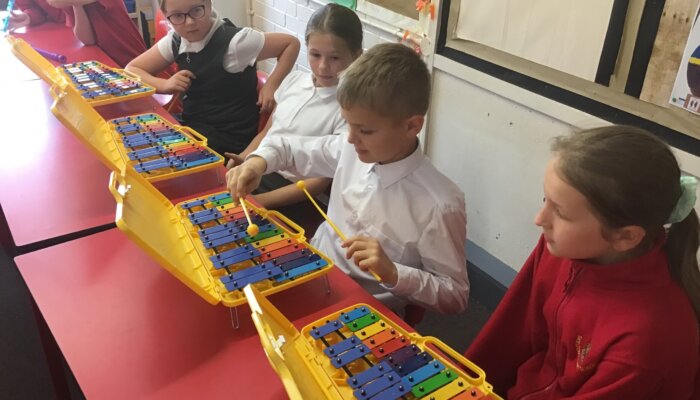
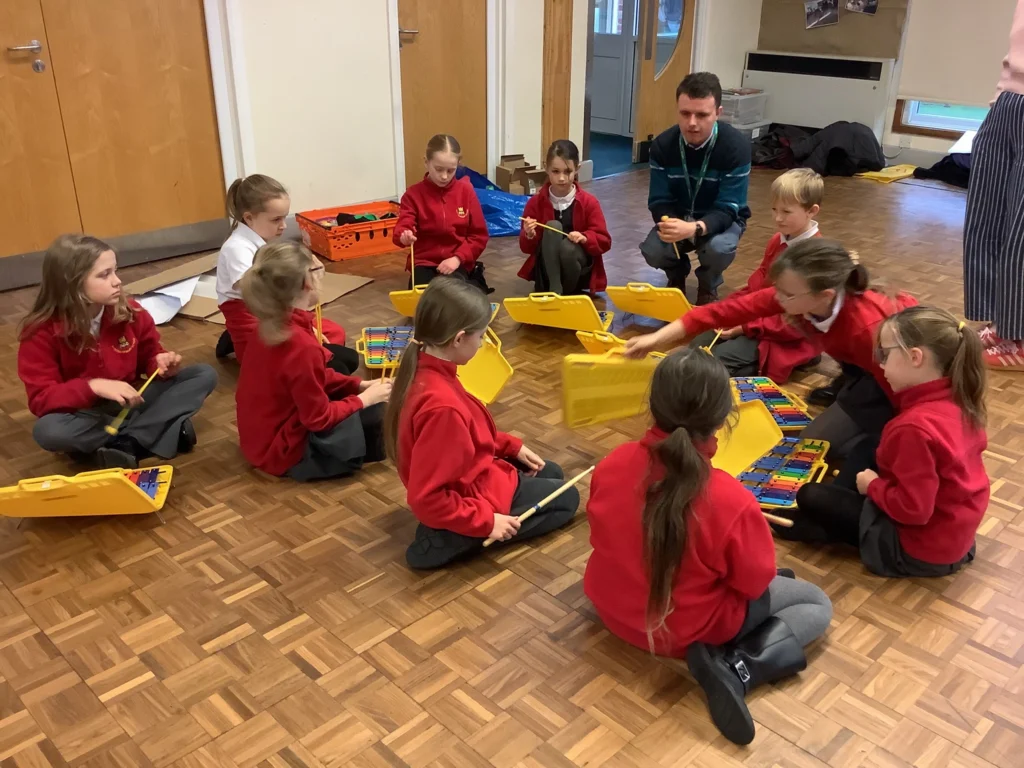
Children will create musical sound effects in response to a given stimulus, encouraging creativity and imagination. They will sing and play percussion instruments, performing simple improvised question-and-answer phrases. As they develop their skills, they will learn the difference between rhythm patterns and pitch patterns and begin to use simple pitched instruments, such as glockenspiels, to explore melody alongside rhythm work.
| Year 1 | Year 2 | |
|---|---|---|
| Singing | Sing simple songs with a limited range, and chants and rhymes from memory. Singing collectively at the same pitch, responding to simple visual directions. Sing call-and-response songs to control and match vocal pitch. Understand how to warm voices ready to sing. | Sing songs with a small pitch range accurately with increasing vocal control. Know the meaning of dynamics (loud/quiet) and tempo (fast/slow) and be able to demonstrate these when singing. Understand good posture to support singing |
| Playing instruments | Play untuned percussion. | Play untuned/tuned percussion and classroom instruments using notes G, A, and B. |
| Listening | Listen attentively and with understanding to music from different historical periods. | Recognise the sound of different families of instruments and how each makes a sound. Listen to music from around the world. |
| Creating | Improvise simple vocal chants using question-and-answer phrases. Create musical sound effects in response to a stimulus. Combine sequences of sounds to make a story. Understand the difference between creating a rhythm pattern and a pitch pattern. Invent, remember and perform rhythm and pitch patterns. Recognise and create graphic notation to | Sing and play, using percussion instruments, simple, improvised question and answer phrases. Create music in response to a non-musical stimulus. Use graphic symbols and dot or stick notation to record composed pieces. |
| Music Technology | y Use the Rhythm Grids tool to create and read simple rhythm patterns. Use the Percussion Writer tool to write and read symbols that represent sounds. Optional: use the Quickbeats tool to explore drum patterns. | Use the Rhythm Grids tool to create and read more complex rhythm patterns. Use the Music Notepad tool to recognise and write music. Use the Listen Out tools to explore music from around the world. |
| Musicianship or Performing and Notation | Walk, move or clap a steady pulse/beat with others, keeping in time as the tempo of the music changes. Create and repeat rhythm patterns and ostinati using body and classroom percussion in time with the beat. Move and dance to the pulse in recorded/live music. Listen for high and low sounds. Sing familiar songs with different voices and talk about the difference in sound. Explore percussion sounds to enhance storytelling. Follow pictures and symbols to guide singing and playing. | Move in time to the beat. Understand and keep in time with changes of speed. Begin to group beats in twos and threes. Play and invent copycat rhythms. Create rhythms using word phrases. Represent rhythms with notation including crotchets, quavers and crotchet rests. Recognise dot notation and match to 3-note tunes played on tuned percussion. Sing short phrases independently within a singing game |
In Key Stage 2
In Key Stage 2, children will develop their aural skills, learning to identify different dimensions in music, such as pitch and texture, with increasing accuracy and aural memory. They will further develop their understanding of music through critical listening, deepening their knowledge of the pieces they hear.
Children will compose in response to different stimuli, structuring their musical ideas to create pieces with a clear beginning, middle, and end. They will learn to notate simple three-note phrases, compose songs, and make compositional decisions about the overall structure of their music. Pupils will explore pentatonic phrases using five notes and create melodies made from pairs of phrases in major and minor keys.
Children will experiment with a wider range of dynamics, from very loud (fortissimo) to very quiet (pianissimo), and extend improvised melodies beyond eight beats. They will develop their improvisation skills to create music with multiple sections and use chord changes as part of improvised sequences.
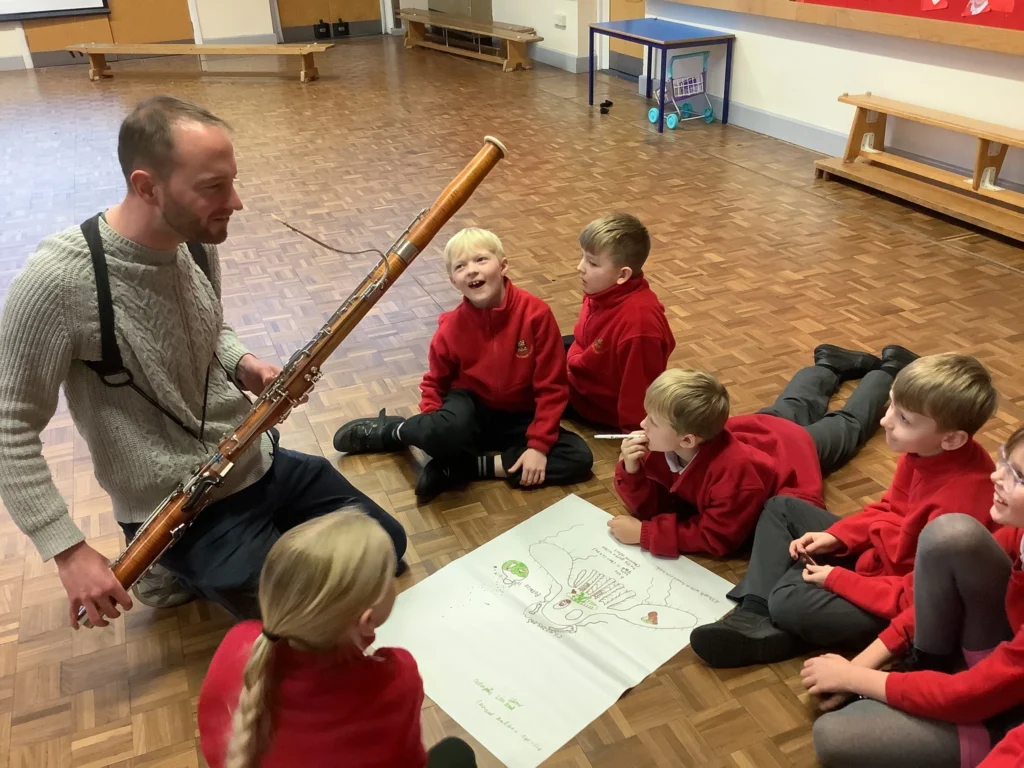
Throughout these activities, children will explore a variety of instruments, including ukuleles, recorders, samba drums, and glockenspiels, applying their skills in both composed and improvised contexts.
| Year 3 | Year 4 | |
|---|---|---|
| Singing | Sing unison songs with widening pitch range, in varying styles, tunefully and with expression. Perform actions confidently and in time. Perform as a choir in school assemblies. | Sing unison songs with an octave range, pitching accurately, and following choral directions. Sing rounds and partner songs with different time signatures. Sing songs with a simple second part to introduce vocal harmony. Perform a range of songs in school assemblies |
| Playing instruments | Play untuned/tuned percussion, classroom and whole-class instruments (if appropriate) using notes G, A, B, D, and E. | Play tuned percussion, classroom and whole-class instruments (if appropriate) using notes C, D, E, F, G, A, and B. |
| Listening | Aurally identify dimensions in music, such as pitch and texture. Appreciate and respond to music from across historical periods and traditions | Listen with attention to detail and recall sounds with increasing aural memory. Understand contrasting traditions and stories. |
| Creating | Develop improvising skills using voices and untuned and tuned instruments, inventing short ‘on-the-spot’ responses with a limited note-range. Compose in response to different types of stimuli. Structure musical ideas to create music that has a beginning, middle and end. Create and simply notate three-note phrases. Compose song accompaniments on untuned percussion. | Improvise with a limited range of notes, paying attention to musical features such as legato and staccato (smooth and detached) articulation. Make compositional decisions about the overall structure of improvisations. Create and play short pentatonic phrases using five notes. |
| Music Technology | Use the Music Explorer tool to write and read music. Use video to capture and record creative ideas. | Use the Music Explorer tool to write sequences of 2, 3 or 4-beat phrases, arranged into bars. Use the YuStudio DAW to explore musical components and sound effects by composing music for a video. Use YuStudio to introduce major and minor chords. Use video to capture and record creative ideas. |
| Musicianship or Performing and Notation | instrument. Play and perform melodies following staff notation with a small range of notes. Listen and accurately repeat short melodic phrases played at different tempos. Recognise a stave and a clef. Understand the differences between crotchets and paired quavers. Apply word chants to rhythms. | Develop instrumental and musical skills. Play and perform more complex melodies following staff notation as a class and in groups. Play and perform in two or more parts from simple notation. Understand the differences between minims, crotchets, paired quavers and their rests. Follow and perform simple rhythmic scores, and be able to maintain an individual part. |
| Year 5 | Year 6 | |
|---|---|---|
| Singing | Sing songs with a sense of ensemble and performance. Observe phrasing, accurate pitching and appropriate style. Sing three-part rounds, partner songs, and songs with a verse and a chorus. Perform in school assemblies and other performance opportunities. | Sing songs with syncopated rhythms. Sing as part of a choir, with a sense of ensemble and performance. Observe rhythm, phrasing, accurate pitching and appropriate style. Experiment with positioning singers. Perform in school and to a wider audience. |
| Playing instruments | Play tuned percussion, classroom and whole-class instruments (if appropriate) using major and minor scales and chords. | Play tuned percussion, classroom and whole-class instruments (if appropriate) using major and minor scales and chord progressions |
| Listening | Develop and expand musical understanding through critical listening. Understand the stories, origins, traditions, history and social context of Brazilian samba | Further develop students’ knowledge and understanding of the music they are listening to. |
| Creating | Improvise freely over a drone or groove, developing a sense of shape and character. Experiment with a wider range of dynamics, including very loud (fortissimo), very quiet (pianissimo). Compose melodies made from pairs of phrases in a major and minor key. Compose a short ternary piece. Enhance these melodies with rhythmic or chordal accompaniment. | Extend improvised melodies beyond 8 beats. Develop improvisation skills to create music with multiple sections that include repetition and contrast. Use chord changes as part of an improvised sequence. |
| Music Technology | Use the Music Notepad tool to create a ternary piece. Use YuStudio to explore major and minor chords and to evoke a specific atmosphere, mood or environment. | Use the Music Notepad tool to plan, compose, notate, and play melodic phrases that incorporate rhythmic variety and interest. Use YuStudio to create and produce music with multiple sections, and be able to explain how musical contrasts are achieved. Use YuStudio to remix real instrument loops. |
| Musicianship or Performing and Notation | Play and perform melodies following staff notation written up to one octave. Understand and play triads/chords. Add chordal accompaniments to songs. Combine acoustic instruments to form mixed ensembles. Develop the skill of playing by ear, copying longer phrases and familiar melodies. Understand semibreves, minims, crotchets, paired quavers and semiquavers. Understand the differences between 2/4, 3/4 and 4/4 time signatures. | Confidently read and perform from notation, identifying note names and duration. Play melodies, making decisions about dynamic range. Engage with others through ensemble playing, taking on melody or accompaniment roles. Understand the difference between semibreves, minims, crotchets, quavers and semiquavers, and their equivalent rests. |
Supporting pupils with additional needs
The curriculum at Skelton is accessible to all pupils, regardless of background or need.
This will be supported and achieved through a range of ways, including:
- Additional repetition of learning to support embedding the knowledge (to help the children to remember the knowledge).
Repetition to take the form of retrieval tasks and learning the same information in different ways over several lessons.
- A wider range of practical activities in the curriculum to support children’s individual needs, including a range of recording methods.
- Reading differentiated to support lower-level readers.
- A range of practical resources and support tools to enable access to the curriculum.
Impact
In order to effectively design tasks it is imperative that the classroom teacher understands fully the success that pupils have had with their learning. We use our purpose built App to track skills progress across History.
It is worth noting that we define success in our curriculum beyond the assessment of the foundation subjects. We also look to build self –belief and respect so that all children develop a sense of self-worth. We hope to see the children realise new skills and find new interests and talents along their learning journey.